
Description
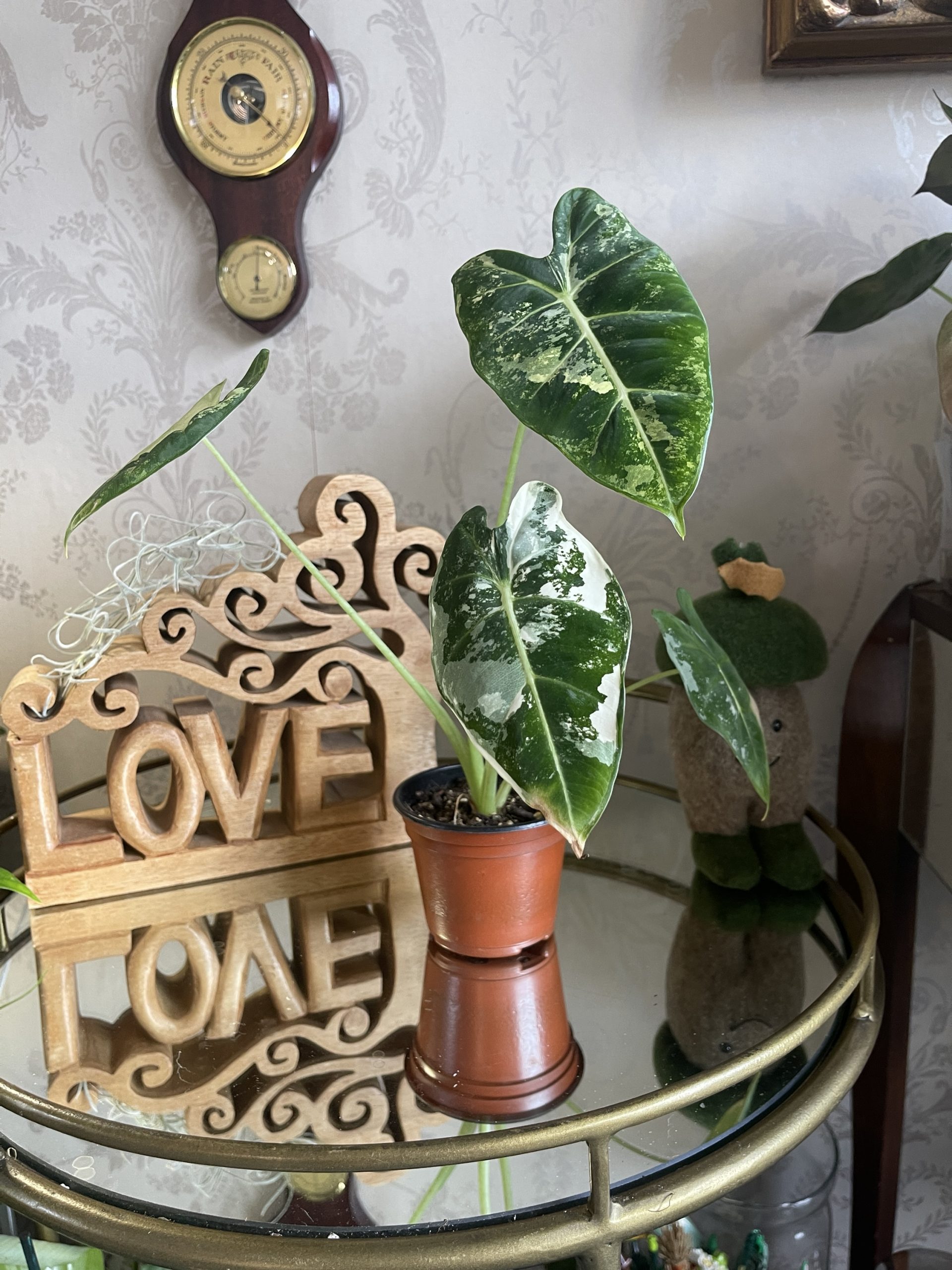
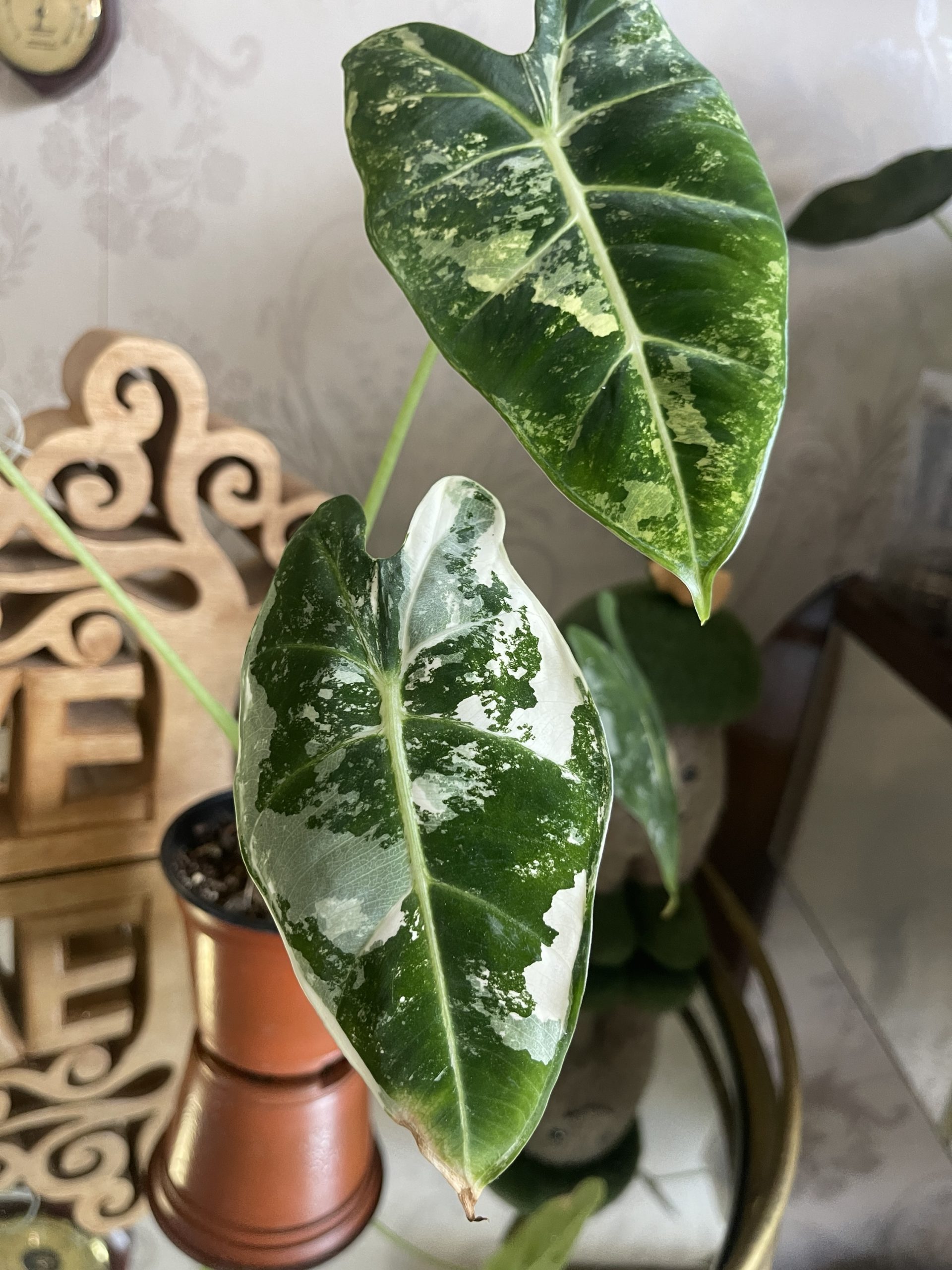
Alocasia micholitziana ‘Frydek’ Variegata is a rare and genuinely remarkable plant. Based on the classic Green Velvet Alocasia, which is already prized for its deep, velvety leaves and contrasting white veins, the variegated form adds a further layer of drama: cream and white sectors that appear differently on every leaf. One leaf may show pale streaking, the next a solid cream half, the next near-entirely white. No two plants are alike, and no two leaves on the same plant will be identical. This is a plant that keeps surprising you.
Origins
Alocasia micholitziana, the species behind ‘Frydek’, is native to the tropical forests of the Philippines, where it grows as an understorey plant in warm, humid environments with bright but heavily filtered light. ‘Frydek’ is a cultivar selected for its particularly defined white venation and velvety leaf texture. The Variegata form carries the same growth characteristics as the stand
Soil and Substrate
Alocasia micholitziana ‘Frydek’ Variegata needs a substrate that retains some moisture without becoming waterlogged. The variegated sections are more sensitive to stress than the green tissue, making good drainage and consistent care particularly important. Our Alocasia Potting Mix is well-suited to demanding Alocasias as it is structured for drainage and root aeration, with enough organic matter to retain gentle moisture between waterings.ard ‘Frydek’, but with the addition of a cellular mutation that disrupts chlorophyll production in unpredictable patterns across the leaves. The white and cream sections contain less chlorophyll than the green, which means the plant benefits from brighter light than its non-variegated counterpart to compensate, while still needing protection from direct sun, which will scorch the pale areas.

Water
Keep the soil consistently moist but not waterlogged. Water your plant when the top layer of soil feels slightly dry, and always ensure the pot has good drainage. Avoid soggy soil or standing water, and do not let the plant dry out completely, as steady moisture is essential for healthy growth.

Light
This plant grows best in bright, indirect light or dappled shade. Keep it away from direct sun, which can scorch its delicate leaves. For healthy growth and vibrant foliage, place it near a north-facing or east-facing window where it will receive plenty of filtered light.

Humidity
This plant thrives in high humidity and benefits from a consistently humid environment. Good humidity levels help support healthy growth and keep the foliage healthy. To increase humidity, use a humidifier or place the plant in a naturally humid room like a bathroom or kitchen. Plant cabinets, grow tents, and terrariums can also help create stable humidity for tropical houseplants, especially in drier homes. When using enclosed growing spaces, ensure there is adequate airflow to prevent excess moisture build-up. Adding sphagnum moss around the stem can also help hold moisture and improve growing conditions.

Temperature
This plant grows best in warm temperatures between 18°C and 26°C. Keep it away from cold draughts and avoid temperatures below 15°C, as cooler conditions can stress the plant and affect healthy growth.
Reviews
There are no reviews yet.